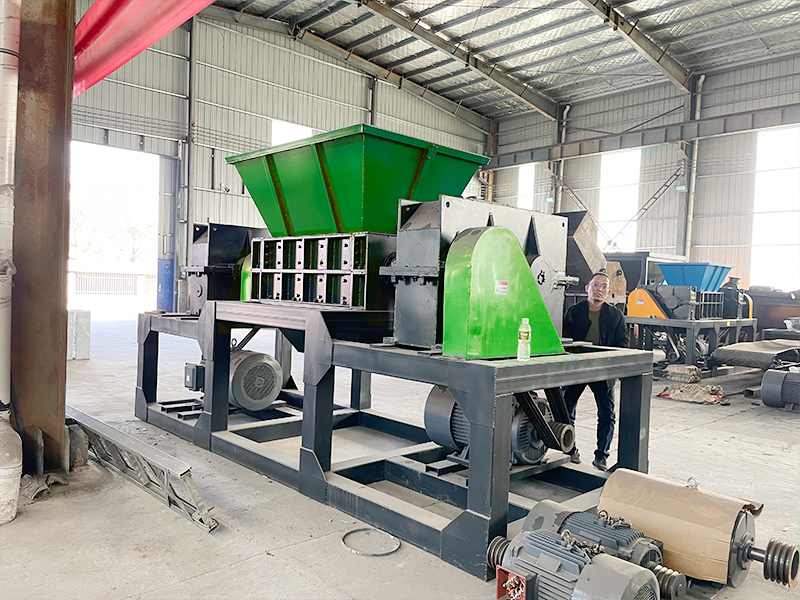
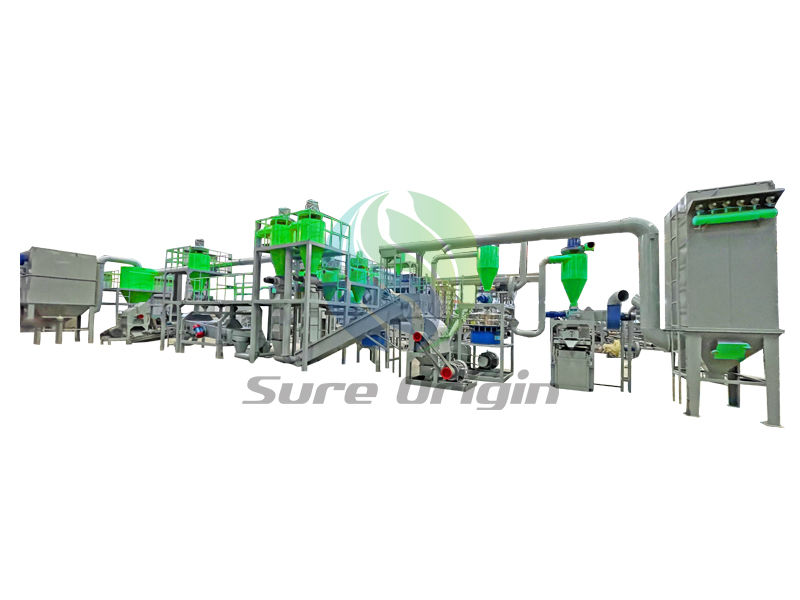
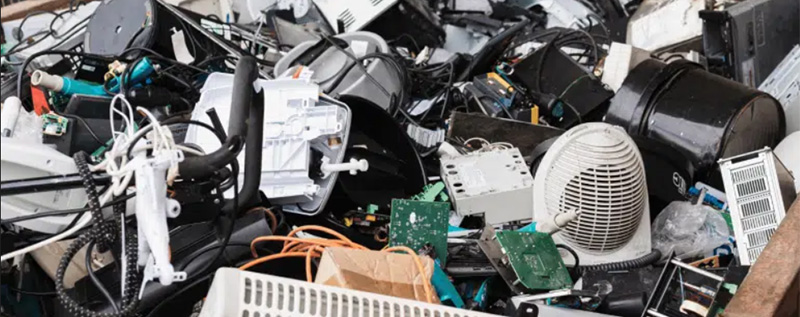
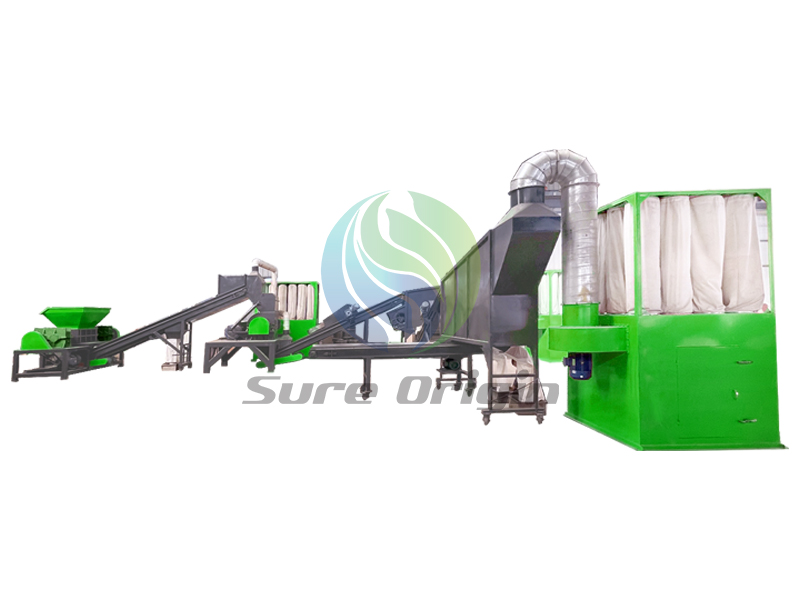
In the realm of heavy-duty material processing, the twin‑shaft shredder stands out as a powerhouse of efficiency and control. Designed for continuous and demanding operations, this machine offers uncompromising performance in size reduction across diverse industries. As a producer of industrial machinery, our twin‑shaft shredder exemplifies engineering excellence and adaptiveness.
Key Features
Dual Rotor Design with Counter‑Rotation
Two parallel shafts rotate in opposite directions, gripping and tearing material with precision. This configuration ensures high torque, evenly distributed shear forces, and optimized throughput, while minimizing power peaks.
Adjustable Knife Clearance
A unique mechanism allows operators to fine‑tune the gap between cutting edges. This adaptability ensures consistent particle size, even with varying material types and thicknesses. It also simplifies maintenance as wear occurs.
Robust Drive System
Equipped with high‑torque motors or gearboxes, the shredder delivers smooth, continuous shredding. Integrated overload protection and reverse modes safeguard against jams, enhancing both safety and uptime.
Modular Knife Configuration
Interchangeable tips made from wear-resistant alloys extend blade life. The modular design enables rapid swaps without reengineering the rotor, minimizing maintenance downtime.
Heavy‑Duty Construction
The frame and shafts are crafted from reinforced steel. Precision-machined bearings and oversized journals ensure stable operation under heavy loads, making the unit suited for continuous industrial applications.
Benefits for Production Environments
High Throughput
Capable of processing large volumes of materials—such as waste, wood, plastics, and scrap—these shredders boost throughput while reducing feed volume and easing downstream sorting and disposal.
Uniform Output Quality
Consistent shred size ensures reliability for downstream processes like recycling, densification, or further grinding.
Operational Safety & Control
Operators can monitor torque, load, and feed rates to prevent jams. Reversible shafts allow for quick clearing of blockages, significantly reducing downtime.
Service-Friendly Design
Blade access and replacement points are positioned for easy maintenance. Knife tips can be accessed without complete disassembly, minimizing production interruptions.
Ideal Applications
The twin‑shaft shredder is suited for diverse industries, such as:
Recycling Systems — Efficiently processes post‑consumer plastics, composite materials, and mixed waste.
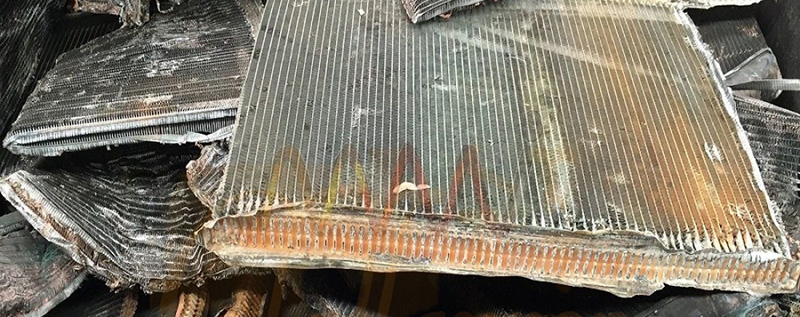
Scrap Metal Preparation — Shreds thin-gauge metal, reducing volume for recycling.
Wood Processing — Ideal for pallets, trim offcuts, crates, and other bulky wooden refuse.
Agricultural & Biomass Processing — Handles crop residue, pallets, cartons, and organic byproducts smoothly.
General Waste Management — Effective in volume reduction before waste incineration, landfill, or energy recovery.
Design Considerations and Customization
To tailor the shredder to specific production needs, the following are critical:
Rotor Diameter and Shaft Length
Larger configurations increase throughput and torque; smaller versions suit compact facilities.
Knife Geometry and Material
Knife tip design and composition (e.g., hardened steel alloys) determine shred pattern, wear resistance, and longevity.
Power & Torque Requirements
Motor or gearbox specifications must align with material hardness and feed characteristics to ensure effective shredding.
Control Systems Integration
Real-time monitoring with feedback (e.g. torque, motor current, load sensors) and programmable interfaces enhance efficiency and safety.
Maintenance Accessibility
Strategically placed doors, hatches, and hydraulic aids can significantly reduce blade-change times.
Conclusion
In demanding industrial environments, the twin‑shaft shredder excels as a reliable and customizable solution for efficient material reduction. Its balanced design, adjustable output, and rugged construction make it an indispensable asset in recycling, waste management, wood processing, and more. Built for strength, fine-tuned flexibility, and long-term performance, it reflects the engineering commitment of a forward-thinking machine manufacturer dedicated to maximizing output and minimizing downtime.